
At 1:07 a.m., the numbers look different.
During the day, revenue feels solid. The Stripe notifications buzz. Clients say they’re happy. Your team shows up. The business looks alive.
But late at night, when you open the bank account, you see what revenue hides.
A tax payment due in three weeks.
A payroll run on Friday.
Two clients at 45 days outstanding.
A vendor tightening terms.
This is where many small businesses begin to fail—not because the idea was bad, not because the owner lacked grit, but because cash moved differently than expected.
You’ve likely seen the headline statistic: 82% of small businesses fail due to cash flow problems. It’s widely cited, frequently repeated, and often misunderstood.
This article goes deeper than the headline.
We’re going to examine:
- What that 82% actually means
- Why profitable businesses still collapse
- The structural cash flow traps most service-based companies fall into
- The psychological blind spots that keep owners stuck
- And the measurable indicators that signal risk long before failure
Because failure rarely begins with bankruptcy. It begins with silence. With avoidance. With small delays that compound.
And if you’re here at 1 a.m., you deserve clarity—not platitudes.
The Statistic And What It Doesn’t Tell You
The figure most often cited comes from industry research showing that 82% of failed small businesses cite cash flow mismanagement or poor understanding of cash flow as a primary factor. It doesn’t mean 82% ran out of customers. It means they ran out of liquidity.
That distinction matters.
Revenue is theoretical until collected.
Profit is an accounting construct.
Cash is oxygen.
Here’s what makes this statistic more revealing than it appears:
1. Many of these businesses were technically profitable.
Investigative reviews of failed companies often show positive net income in the 12 months preceding closure. They were “making money” on paper. But:
- Receivables were aging past 60 days.
- Inventory purchases outpaced sales.
- Loan repayments consumed operating cash.
- Tax liabilities were unfunded.
The business didn’t fail because it wasn’t viable. It failed because timing killed it.
Cash flow failure is not about math errors. It’s about misalignment between inflows and obligations.
2. Cash flow issues are usually cumulative, not catastrophic.
Contrary to popular belief, small businesses rarely collapse after one dramatic event. They decline gradually:
- A slow quarter.
- A large client delaying payment.
- A hiring decision based on projected revenue.
- A credit line quietly maxed out.
By the time the owner realizes there’s a structural issue, stress has replaced strategy.
The 82% statistic isn’t a warning about incompetence. It’s a warning about invisibility.
Why Profitable Businesses Still Fail
Here’s the uncomfortable truth: profit does not guarantee survival.
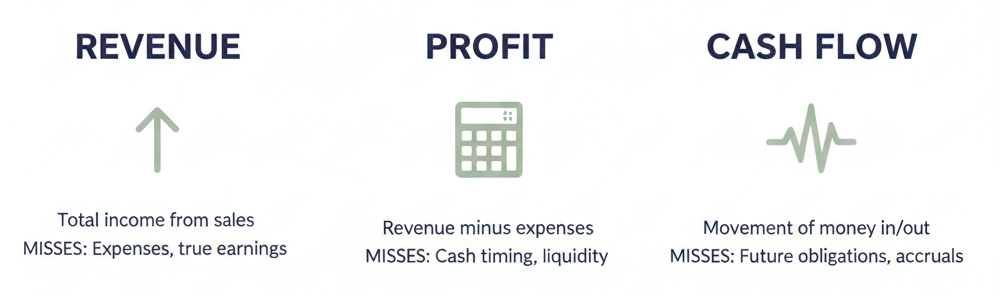
To understand why, we need to separate three concepts that are often blurred together:
| Metric | What It Measures | What It Misses |
| Revenue | Sales generated | Collection timing |
| Profit | Revenue minus expenses | Cash movement |
| Cash Flow | Net liquidity movement | Long-term sustainability |
A business can report $250,000 in profit and still be unable to cover payroll if receivables are delayed.
Let’s break down the most common structural drivers behind this paradox.
The Real Causes of Small Business Cash Flow Problems
1. Growth That Outruns Liquidity
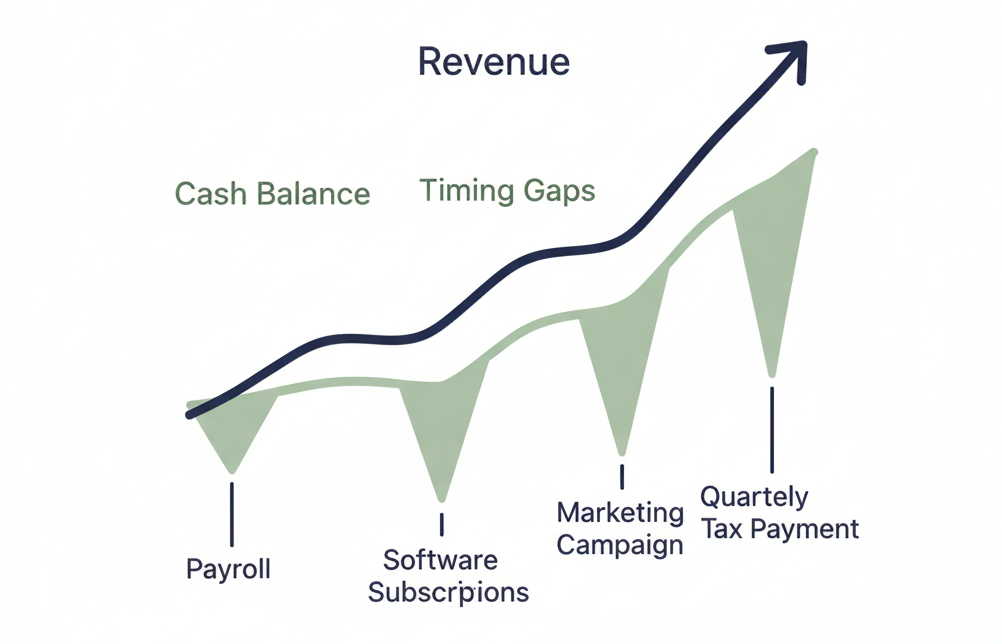
Growth feels like success. But growth consumes cash.
When service-based businesses expand, they typically incur:
- Higher payroll costs before client payments are received
- Increased marketing spend upfront
- Software and infrastructure scaling costs
- Larger tax obligations
Here’s the overlooked dynamic: revenue growth increases working capital requirements.
If you double revenue but your payment terms remain net 30 or net 45, you’ve just doubled the amount of cash floating outside your bank account.
This is one of the least discussed reasons why businesses fail due to cash flow. Growth magnifies existing timing gaps.
2. Tax Liabilities Treated as “Future Problems”
Many small businesses operate as pass-through entities. Taxes aren’t withheld automatically. They must be reserved intentionally.
But in practice, tax reserves often become:
- Emergency payroll bridges
- Equipment purchases
- Personal withdrawals
By the time quarterly payments are due, liquidity tightens.
Investigative analysis of small business closures frequently reveals a pattern: tax debt accumulation precedes operational shutdown.
It begins with one underfunded quarter. Then penalties. Then liens. Then frozen accounts.
The business didn’t fail from lack of demand. It failed from deferred obligations.
3. Accounts Receivable Blindness
One of the most dangerous phrases in small business:
“They’ll pay soon.”
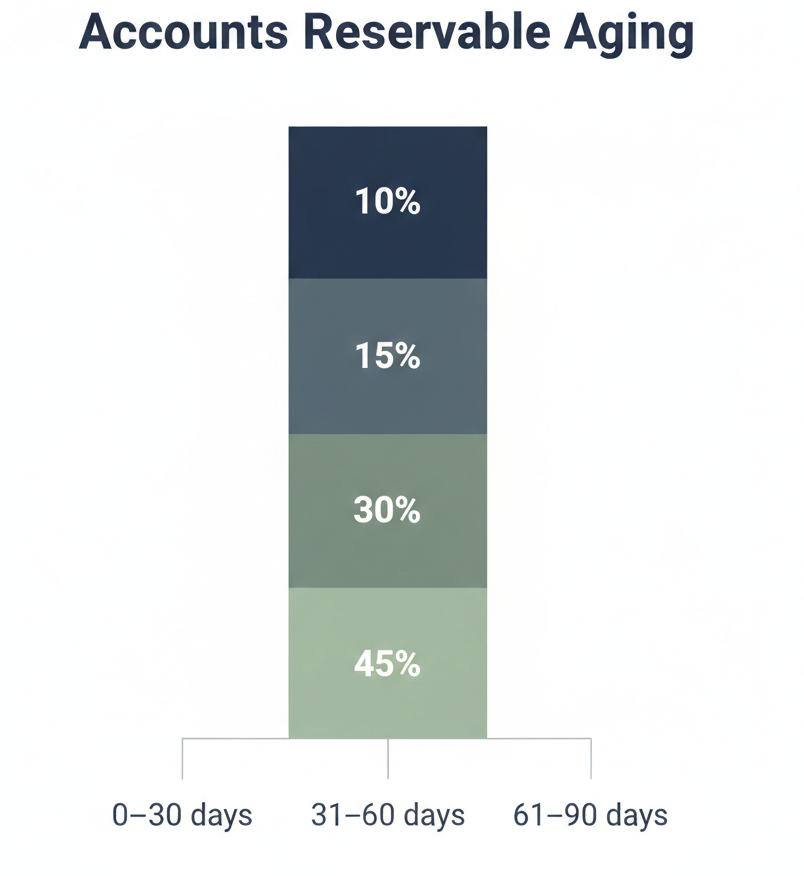
Cash flow strain often hides inside accounts receivable aging reports that no one reviews carefully.
A service-based firm might show:
- $120,000 in receivables
- 40% over 60 days
- 15% over 90 days
On paper, that’s revenue. In reality, it’s risk.
Here’s the deeper insight: The older an invoice becomes, the lower the probability of full recovery.
Yet many businesses operate as if aged receivables are guaranteed assets. They are not.
4. Debt Used as Operating Oxygen
Lines of credit are designed as bridges. But many small businesses convert them into life support systems.
When monthly operations depend on revolving debt:
- Interest becomes a fixed expense
- Margin compresses
- Risk tolerance decreases
- Strategic decisions narrow
This creates a subtle psychological shift. The business begins making decisions to protect short-term liquidity rather than long-term stability.
Over time, innovation declines. Risk aversion increases. And stress becomes chronic.
5. Owner Compensation Avoidance
This one rarely appears in SEO articles.
Many founders underpay themselves to preserve cash. On the surface, it appears responsible.
But over time:
- Personal savings deplete
- Household stress increases
- Decision-making becomes fear-driven
- The business subsidizes itself with unpaid labor
Eventually, the owner cannot continue.
When we talk about why businesses fail cash flow, we rarely acknowledge that owner burnout due to prolonged financial instability is a direct liquidity consequence.
Cash flow is not just a spreadsheet issue. It’s a psychological one.
The Psychological Pattern Behind Cash Flow Collapse
There’s a recurring emotional cycle:
- Revenue increases.
- Expenses rise to match growth.
- Cash tightens.
- Anxiety increases.
- Financial review becomes uncomfortable.
- Avoidance sets in.
- The problem compounds.
By the time most owners seek help, they are not just dealing with numbers. They are dealing with shame.
And shame is expensive.
It delays intervention. It prevents honest forecasting. It keeps owners from restructuring early when options still exist.
This is why generic advice—“monitor your cash flow closely”—fails. It ignores the emotional friction.
Cash flow clarity requires visibility. Visibility requires courage.
The 7 Early Warning Signals Most Owners Miss
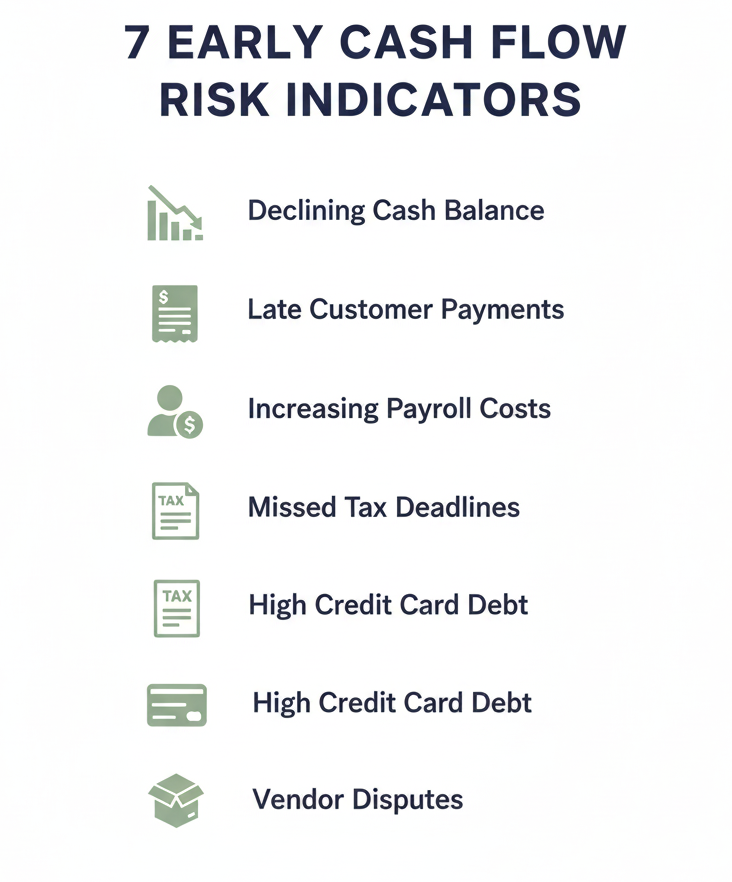
If 82% of failures involve cash flow, we should be able to detect risk earlier.
Here are measurable indicators that often precede serious distress:
1. Operating Cash Flow < Net Income for 2+ consecutive quarters
If profit exceeds cash flow consistently, receivables or timing issues are expanding.
2. Receivables Aging > 30% over 60 days
Indicates collection systems are weak or client quality is declining.
3. Payroll-to-Revenue Ratio Increasing Without Margin Expansion
Growth may be outpacing pricing discipline.
4. Tax Payable Increasing Without Segregated Reserve Account
Suggests liquidity substitution.
5. Credit Line Utilization > 60% for Routine Operations
Debt is functioning as revenue smoothing.
6. Owner Distributions Paused Indefinitely
Often a sign of survival mode.
7. Vendor Terms Shortening
Suppliers perceive risk before owners do.
Each of these signals is measurable. Yet many businesses do not track them monthly.
Not because they can’t. Because they don’t want to see what they might reveal.
The Structural Fix: Designing for Liquidity, Not Just Profit
If profit is the scoreboard, liquidity is the bloodstream.
Here’s what financially durable small businesses do differently:
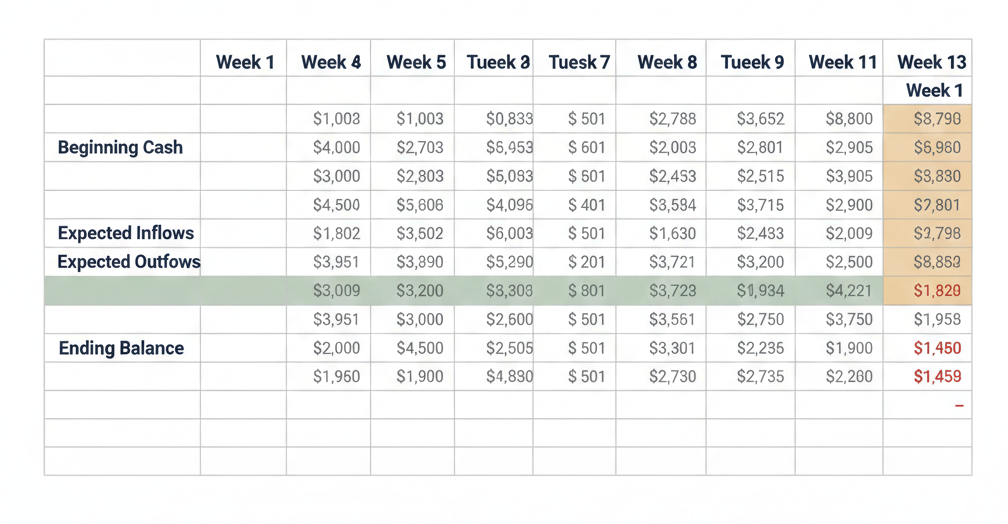
1. They Forecast Cash Separately From Profit
A rolling 13-week cash flow forecast provides more actionable insight than an annual P&L projection.
Why 13 weeks?
Because it aligns with payroll cycles, tax quarters, and client payment rhythms.
This short horizon reduces overwhelm and increases intervention speed.
2. They Price for Margin Buffers
Many service-based businesses operate with thin margins because pricing was set competitively, not strategically.
A 5% margin cushion can determine survival during delayed payments.
Investigative data across multiple industries shows that firms with gross margins above 50% exhibit significantly higher survival rates during downturns.
Margin is not greed. It’s resilience.
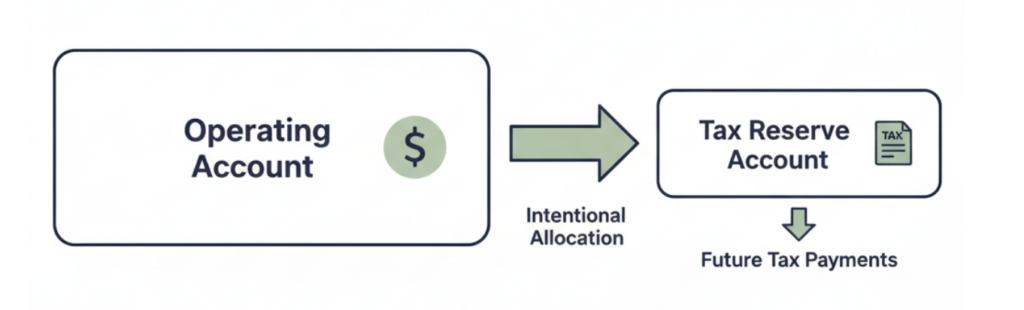
3. They Separate Tax Cash Physically
Not mentally. Physically.
A separate tax account prevents accidental liquidity cannibalization.
This single structural adjustment prevents a large percentage of “sudden” crises.
4. They Tie Hiring to Collected Revenue, Not Projected Revenue
Hiring based on signed contracts rather than collected cash is one of the most common accelerators of liquidity strain.
Collected revenue is safer than forecasted optimism.
5. They Treat Cash Flow Reviews as Emotional Hygiene
Monthly cash reviews are not just financial exercises. They are stress reduction rituals.
Clarity reduces catastrophic thinking.
When owners see numbers clearly, fear becomes manageable.
The Hidden Cost of Ignoring Cash Flow
Beyond failure, there’s a quieter consequence.
Chronic liquidity strain leads to:
- Short-term decision bias
- Reduced innovation
- Delayed investment
- Team instability
- Personal health impact
Studies on financial stress in entrepreneurs show elevated cortisol levels, impaired sleep, and reduced strategic cognition.
Cash flow instability isn’t just operational risk. It’s neurological pressure.
And under pressure, even competent leaders make reactive decisions.
A More Honest Conversation About Survival
If you are reading this because your numbers feel tight, consider this:
Cash flow problems are common not because owners are reckless, but because most businesses are built around revenue goals, not liquidity engineering.
The system encourages growth headlines, not balance sheet literacy.
There is no shame in discovering a structural weakness. There is only risk in ignoring it.
The businesses that survive long-term are not the boldest. They are the most informed, check out of our packages or just book a free consultation.
Final Thought: Cash Flow Is a Design Decision
The 82% statistic is not destiny. It’s data.
It tells us that liquidity mismanagement is widespread. But it also tells us something empowering:
If failure is largely structural, then survival can be engineered.
You don’t need:
- A viral product.
- Venture capital.
- Perfect forecasting.
You need visibility.
You need margin.
You need systems that respect timing.
At 1:07 a.m., the numbers may feel heavy.
But clarity changes the weight.
And cash flow, unlike market forces, is one of the few variables you can redesign.
That’s not motivational language. It’s operational truth.
If most businesses fail because they misunderstand how money moves, then the competitive advantage is simple:
Understand how money moves.
Design for it.
And refuse to look away.